From Streetlifting Spectator to National Podium
Nick’s path from general strength to competitive Streetlifting and how constant refinement keeps driving his progress.
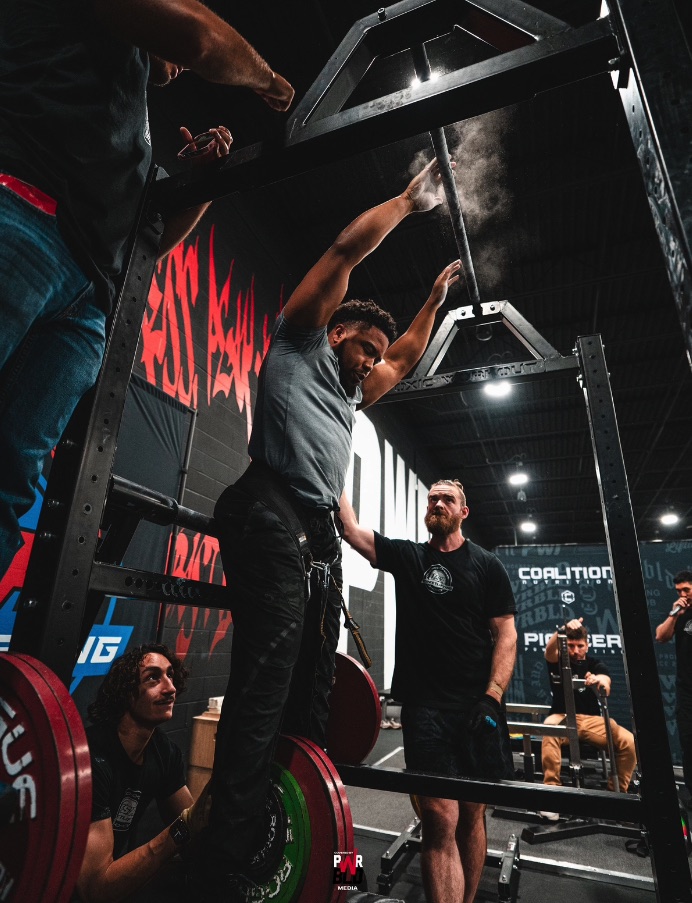
In March 2025, Nick almost did not make the trip to Virginia.
He had recently discovered Streetlifting and knew he wanted to compete. But there was a problem. He did not yet feel proficient in the movements, and the idea of showing up to a Streetlifting meet-up as someone still learning the sport came with some hesitation. Even still, He went anyway.
Turns out, showing up paid off. Within a year, Nick moved from spectator to competitor, took second at Classic Nationals, and mapped out a clear direction for his training. What began as curiosity became a total commitment to competitive strength.
Standing on the podium was a huge milestone, but it also sparked a fresh question: how much further could he push it?
Strong, but New to the Sport
Nick was not starting from a lack of strength or effort.
Before coaching, he already trained seriously. His approach was a form of powerbuilding with some conjugate-style exercise rotation, built around hard compound lifting and max-effort work. He had developed a meaningful general strength base, including a strong Bench Press.
What he did not yet have was the same level of understanding of Streetlifting-specific performance. Competition standards, recovery, mobility, RPE, and the connection between accessory work and competition lifts were not yet part of a fully developed system. Training hard was familiar. Knowing exactly how to direct that work toward a sport was still being learned.
That distinction made all the difference.
Streetlifting is not simply a matter of bringing existing strength to a new exercise. The movements have standards, technical demands, and competitive conditions that require their own preparation. A strong athlete can still have a great deal to learn.
For Nick, the next step was not to become a different kind of athlete. It was to become more skilled at applying the strength he already had.
Learning to Leave Something in the Tank
One of the earliest changes came through RPE and Tempo work.
Before coaching, intentionally slowed repetitions were uncommon in Nick’s training. He also rarely programmed deliberate reps in reserve. The emphasis was more often on pushing hard and rotating exercises than on using different levels of effort for specific purposes.
Over time, that approach began to change.
Nick learned that not every set needs to be a test. Different RPE ranges can serve different purposes, from technique development and volume accumulation to fatigue management and peaking.
That shift also changed how he evaluated his own training.
Video became more than a way to record a major PR. It became evidence.
A rep can feel strong while still revealing a technical issue. A weight can move well without being the best choice for the next attempt. A set that looks ordinary in the moment can become useful information when compared with previous training.
The more information Nick collected, the more accurately he could evaluate what was happening.
As he put it:
“With more information, I can be more honest with myself and make adjustments accordingly on a week-to-week or block-to-block basis.”
That is a different way of approaching training. The goal is not simply to complete the session. It is to understand what the session is bringing awareness to.
More Information, Better Decisions
Nick’s analytical personality became one of the defining features of his development.
His training decisions now draw from quantitative performance data, historical trends, video recordings, coach feedback, and his own session notes. Together, those details create a clearer picture of what is working and what needs attention.
That might mean identifying the difference between a competition-standard rep and one that would not pass. It might mean recognizing a technically valid movement that is still inefficient. It might mean changing an accessory because it is not addressing the weakness it was intended to address. It all comes down to the feedback loop.
Good programming isn't a rigid blueprint. It's an adaptable setup that gives you enough insight to know when to hold the course and when to pivot.
Nick’s experience reflects that idea closely:
“This is extremely valuable because it establishes an iterative process in which we can adjust programming approaches based on any observed weaknesses or areas for improvement.”
Data isn't worth much if you just collect it for its own sake. The real value is making smarter decisions on the platform.
Addressing the Dip
About a month before Classic Nationals 2025, an in-person training session exposed a problem that could not be solved through more effort alone.
Nick was struggling to consistently achieve Dip shoulder depth on one side. Attempts to address the issue during the session did not resolve it.
A subsequent PT evaluation identified biceps tendinitis affecting the shoulder joint. Programming was adjusted to include more dedicated mobility work.
The lesson was not simply that mobility matters. It was that the right intervention depends on understanding the problem.
Without external feedback, Nick believes he likely would have continued training Dips without giving the mobility issue enough attention. Instead, the information from the session led to a different approach. That's where thoughtful coaching shines. Sometimes you just need more practice; other times you need a tweak in programming, a technical correction, or a completely different physical intervention.
The system has to be capable of recognizing the difference.
Preparing for the Unknown
Competition adds another layer to training.
A lift that feels familiar in the gym can feel very different when commands, judges, warm-ups, and an unfamiliar environment enter the picture. Nick’s first competition experience helped make that clear.
By the time Classic Nationals arrived, he had accumulated competition-standard training reps, a mock meet, and a state-level competition. He had also developed greater familiarity with commands and judging.
The goal was not to make Nationals feel completely predictable. That is not possible.
It was to reduce how many elements of the day would be genuinely new.
That preparation mattered. It gave Nick more experience to draw from when the competition itself demanded something different from training.
The 100 kg (220 lb) Decision
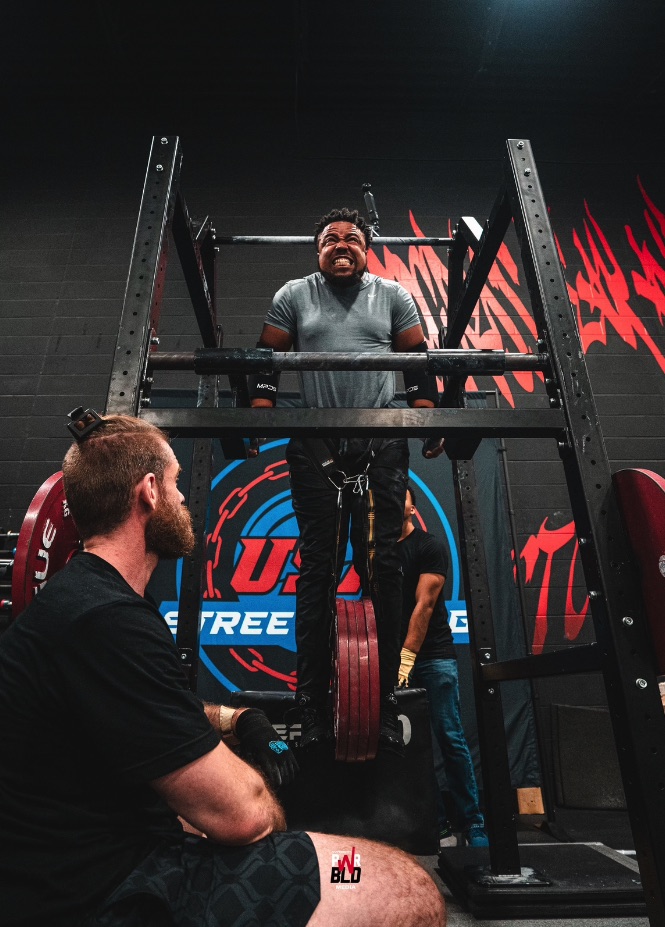
The defining scene of Classic Nationals 2025 came on the Dip.
Nick entered the competition wanting to hit a 100 kg (220 lb) Dip. But the goal was not enough on its own. The second attempt needed to provide evidence that the third attempt was there.
He took 92.5 kg (204 lb).
It moved exceptionally well.
That changed the decision. The goal was still 100 kg (220 lb), but now there was a stronger reason to take it. The evidence supported the attempt.
Nick came back for his third attempt and successfully lifted 100 kg (220 lb), setting a new PR.
However, the moment was more than just a big lift. It was proof of the work they’d put in over the preceding months: Goal. Preparation. Observation. Evidence. Decision. Execution.
The result was a second-place finish in the −94 kg class (207 lb limit) at Classic Nationals 2025, with a 62.5 kg (138 lb) Chin-Up and 100 kg (220 lb) Dip.
For an athlete who had only recently discovered the sport, it was a significant achievement.
Second at Nationals, and Still Developing
The podium was not the end of Nick’s progression.
Since Nationals, his development has expanded beyond the two Classic lifts. His Squat has progressed from under 200 kg (441 lb) before coaching to 222.5 kg (491 lb) in training. His Bar Muscle-Up has continued to develop, and he has kept refining the Chin-Up and Dip.
That broader development matters because Nick’s goals have also expanded.
The next stage is not simply about repeating a successful Classic performance. It is about becoming a more complete Streetlifter.
That means building strength across all four lifts, improving technical consistency, and continuing to understand what his training is revealing.
The podium showed what was possible. The work since then has been about finding out what comes next.
Adaptability Over Dogma
One of the clearest themes in Nick’s training is that a method does not become permanent simply because it worked once.
His Chin-Up grip is one example. He successfully competed using a thumb-over grip. Later, a thumb-under grip appeared to work better.
There was no reason to remain loyal to the original choice simply because it had previously succeeded.
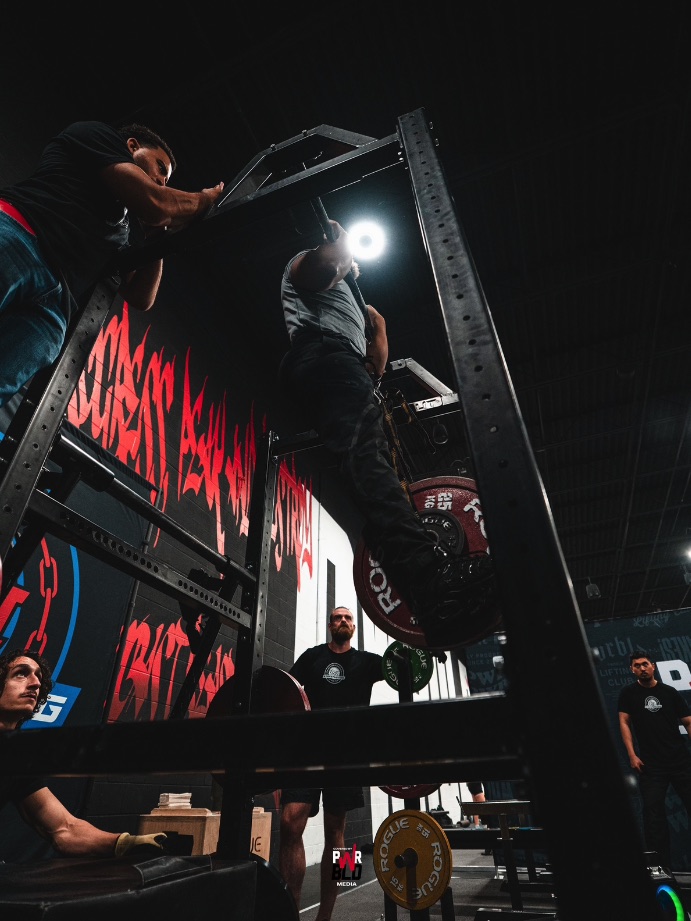
The same principle applied to Bar Muscle-Up development.
A PVC-pipe drill was tested as a way to reduce hip deflection. It did not appear to transfer as well as hoped. Weighted Bar Muscle-Ups proved more useful because Nick had something to squeeze between his feet and could better control the instinct to kick.
The takeaway was clear.
Test the method. Observe the athlete. Keep what works. Change what does not.
Coaching shouldn't force an athlete into a fixed box. It should offer a framework that adapts as the lifter grows.
Beyond Classic
Nick’s development has continued into lifts that did not contribute to his 2025 Classic podium.
He achieved his first weighted Bar Muscle-Up in December 2025 and later progressed to 10 kg (22 lb).
Increased pulling strength, improved shoulder mobility, and growing confidence have all contributed to his development, but technique remains a significant part of the work ahead.
The Squat has also become an important target.
A training best of 222.5 kg (491 lb) has established a new baseline. The next meaningful milestone is 500 lb (226.8 kg).
That is an ambitious target, but it is not being presented as a guarantee. It is simply the next number Nick wants to chase.
The broader goal is to become more competitive with stronger athletes in the −94 kg class (207 lb limit) across an All Four context.
That means continuing to develop the Bar Muscle-Up, improving the finishing strength of the Chin-Up, refining the Dip, and seeing how far the Squat can progress.
Returning to Nationals
The next Classic Nationals preparation feels different because Nick is no longer stepping into the unknown.
He understands more about competition flow, equipment preferences, warm-ups, Dip-width setup, and the physical and mental demands of competing.
The second-place finish creates a higher standard for what comes next. But Nick is deliberately approaching the new year as a blank slate.
The focus is not simply on defending a placing, but rather increasing his own strength compared to last year and demonstrating what he has learned. That means progress can take several forms.
A higher total is the most direct proof. But so is moving last year’s weights with less effort. So is having a stronger starting point, where weights that once belonged to second or third attempts become realistic earlier attempts.
Improved technique matters too.
The competition reps themselves should look better than they did in 2025.
Placement depends partly on who else shows up. Performance development is the part Nick can control.
What Still Needs Work
The next stage is not without limitations.
- The Dip has improved, including greater use of posterior pelvic tilt and more consistent reps. The focus now is on continuing to identify the weak points that can unlock more competition performance.
- The Chin-Up has good initial speed. The remaining target is improving the ability to finish and grind through harder reps rather than relying predominantly on early acceleration.
- The Bar Muscle-Up has strength behind it, but technique remains the larger developmental problem.
- And the Squat has a new baseline, with 500 lb (226.8 kg) now the next significant target.
Being aware of those next steps does not equal failures in training, more so creating a path toward the next breakthrough.
Seeing It Through
Nick’s Streetlifting journey began with a decision to make the trip to Virginia before he felt completely ready.
That decision led to a new sport, a new training environment, coaching, competition, a national podium, and a broader ambition for what he can become.
His growth doesn't guarantee every lifter a spot on the podium, but it shows what can happen when a hard-working athlete commits to a process and stays open to what the training reveals.
As Nick describes it:
“Taking a leap of faith and seeing it through.”
The next Nationals will provide another opportunity to see how far that process has taken him.
And looking beyond the Classic, one question remains: how far can a dedicated athlete go when training becomes a continuous conversation rather than a series of heavy grind sessions? Nick’s first national podium gave us one answer.
The next stage will tell us more.
Training hard is not the same as knowing what to change.
Streetlifting University 1:1 Coaching combines individualized programming, performance tracking, technical feedback, and block-by-block review so your training can evolve based on what actually happens.